ON FRIENDSHIP / (COLLATERAL DAMAGE)
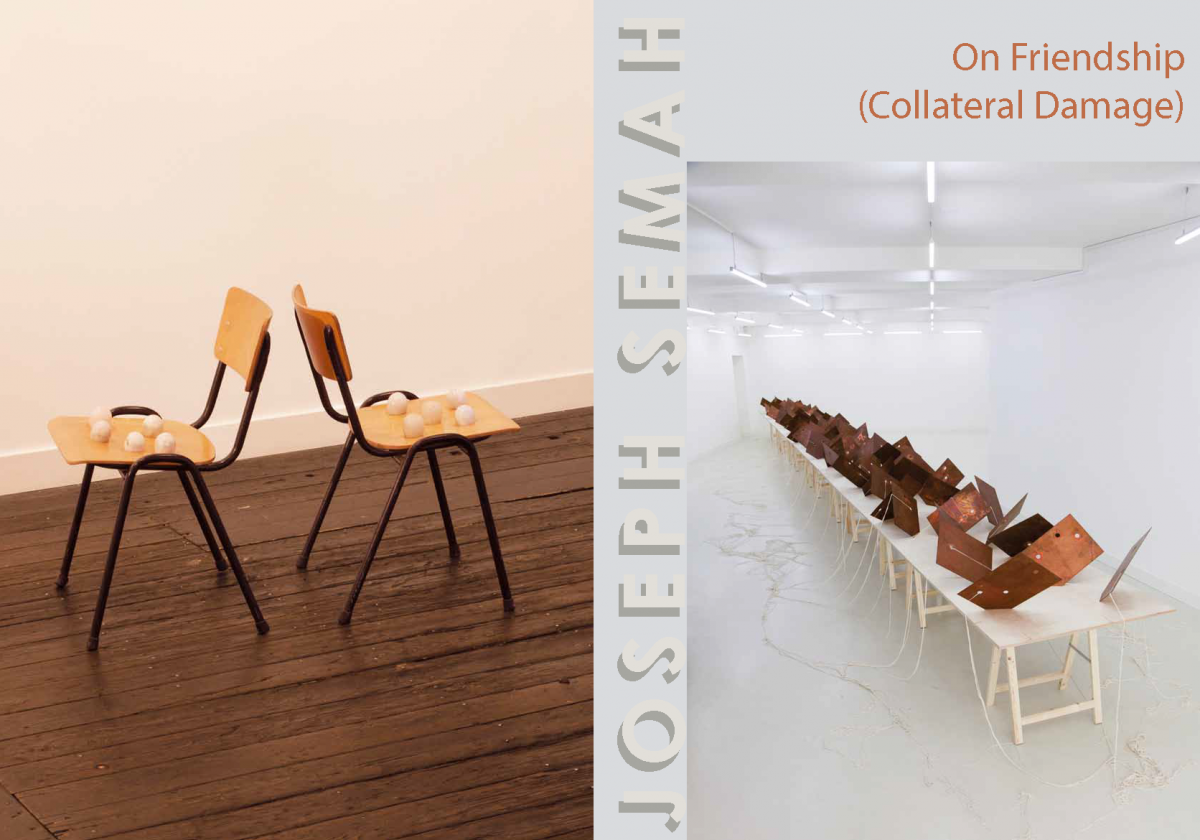
Since 2015 Joseph Sassoon Semah initiated the large-multi-year project entitled: On Friendship / (Collateral Damage) in which he supplements Western art-history with the missing information, the ‘empty page'.
By exchanging research, cultural heritage, art, exhibitions, performances, round-table discussions, interviews and video reports, articles on internet and an English version publication, knowledge, opinions and experiences have been shared, generating attention for a different outlook than the dominant Western one. By returning to the source of rich traditions, the history of art and culture has been freed of one-sided information and interpretation. Exile and the meaning of tangible and intangible cultural heritage, identity crises, the urgency for diversity and the necessity of refocusing on cultural heritage in museums and cultural institutions have been put on the agenda. It is important that the underexposed histories and perspectives become part of Western history and its future.
On Friendship / (Collateral Damage) V
- Between Graveyard and Museum’s Sphere
Het Nieuwe Domein, Sittard, February 4-June 30, 2024
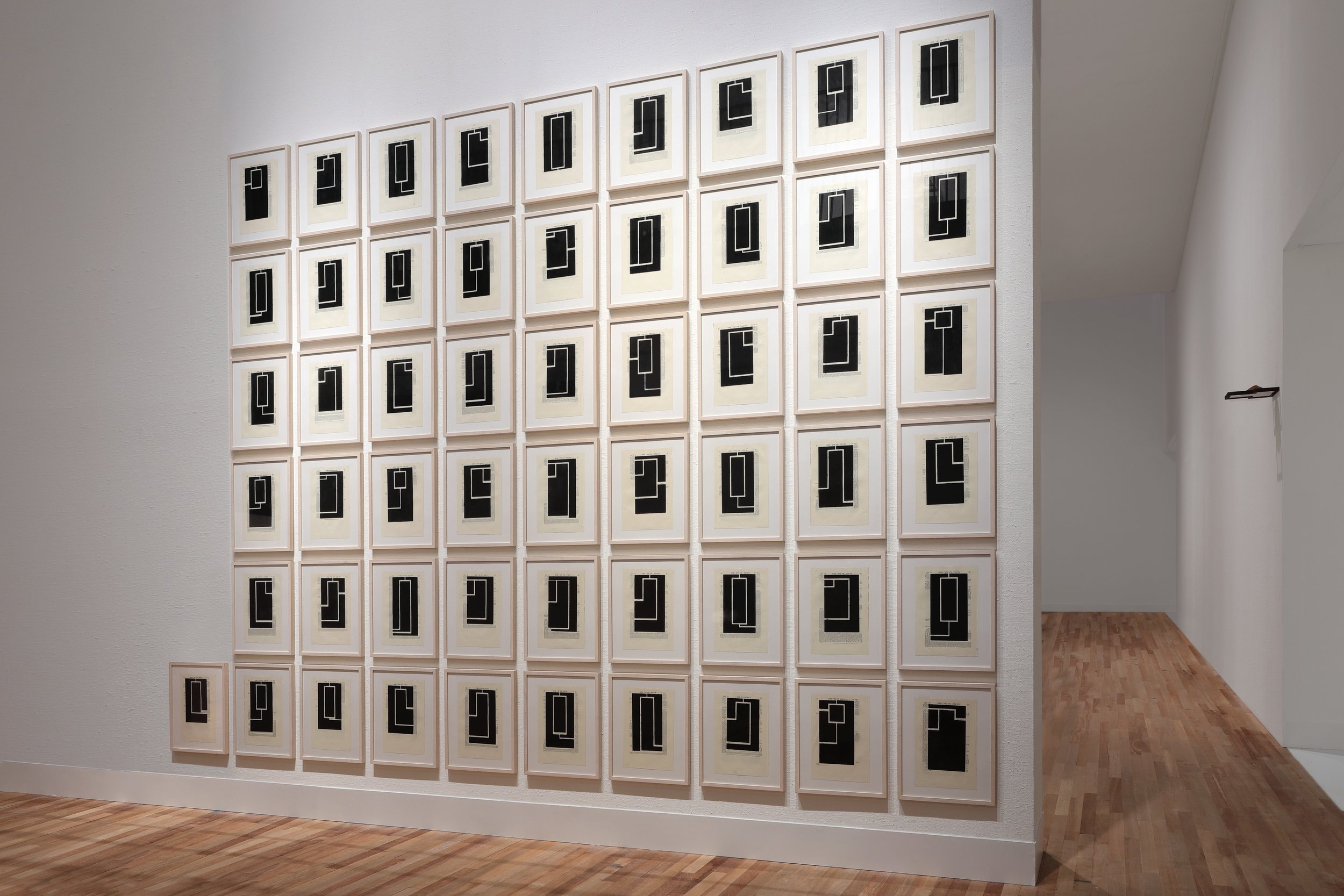
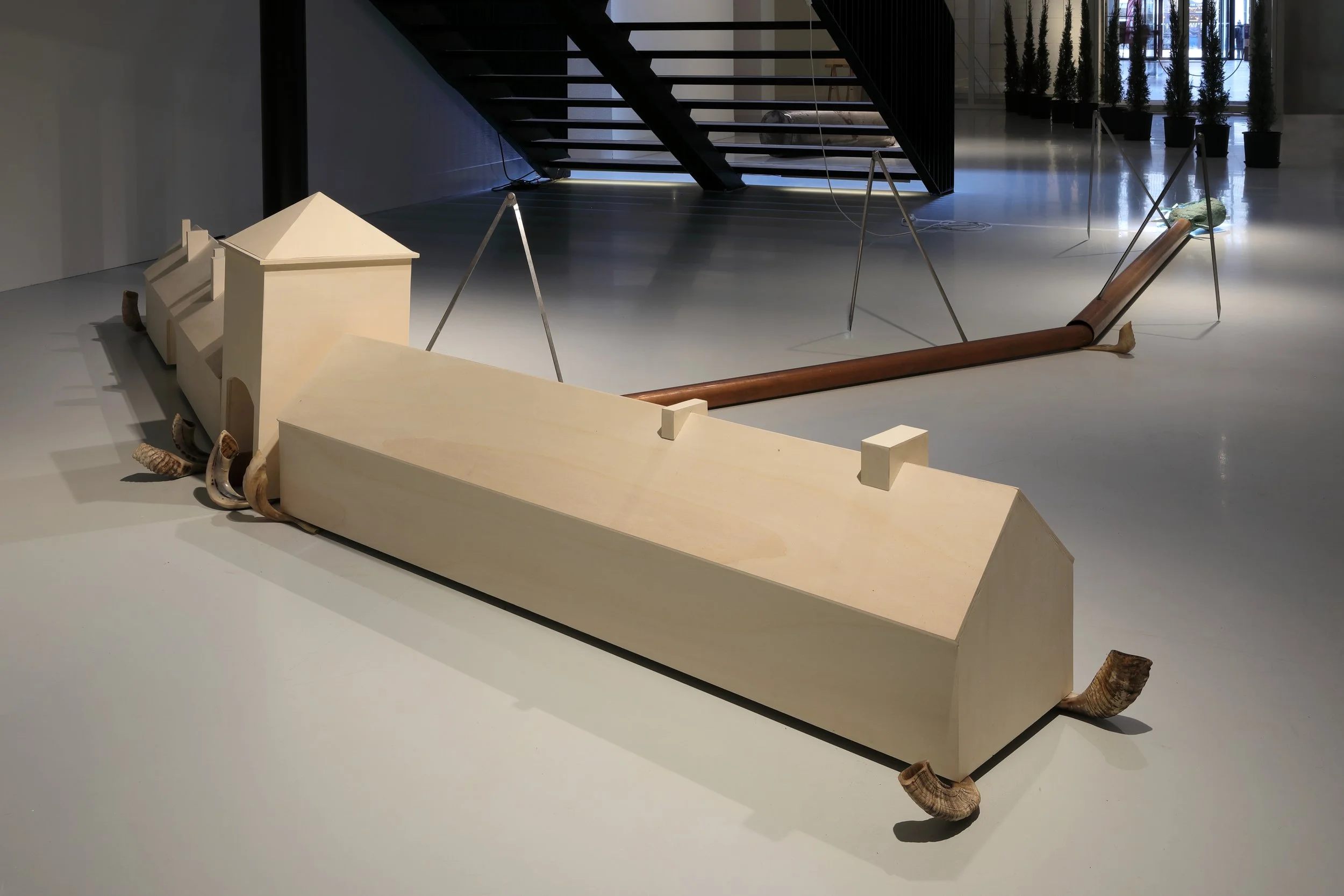
At first glance, a cemetery and a museum seem to have little in common. Yet they both give meaning to the artworks Joseph Sassoon Semah presents in the exhibition. He takes the visitor on a wonderful journey of exploration from King Solomon's Temple in Jerusalem, through Baghdad's lost public space, the waiting room of his grandfather Sassoon Kadoori (1886-1971), the chief rabbi of Baghdad, and the Auschwitz-Birkenau extermination camp, to spatial architecture based on the Talmud Bavli.
Simultaneously, he explores his personal Galut (diaspora)—the complex identity being created in Baghdad, Jerusalem, and Amsterdam. The exhibition title alludes to life in exile ('Galut') with no motherland and physical cultural heritage to return to (personal graveyard), as well to the museum, which has erased the knowledge of the Jewish layers of imagery/meaning in Western artworks (universal graveyard). Each of Sassoon Semah's artworks in Het Nieuwe Domein serves as a witness to the profound loss, and at the same time reclaiming the lost world and making Jewish culture, symbols, tradition, and identity visible in a different cultural environment.
He demands recognition and acknowledgement for the lost knowledge of Judaism and thus liberates himself from his dis-placement. This is the ultimate task of Joseph Sassoon Semah, to be ‘The Guardians of the Door of the Museum’ and by that the artworld.
On Friendship / (Collateral Damage) IV
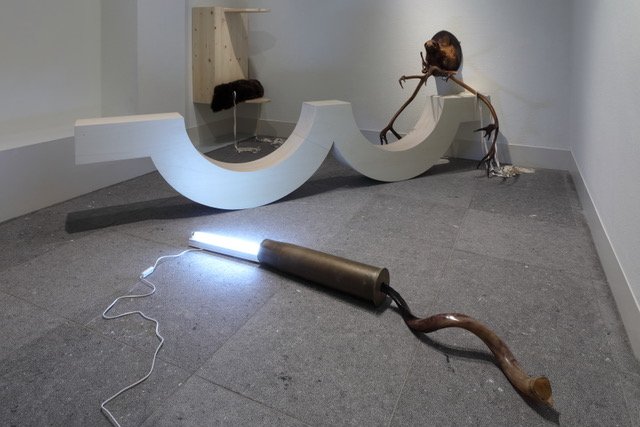
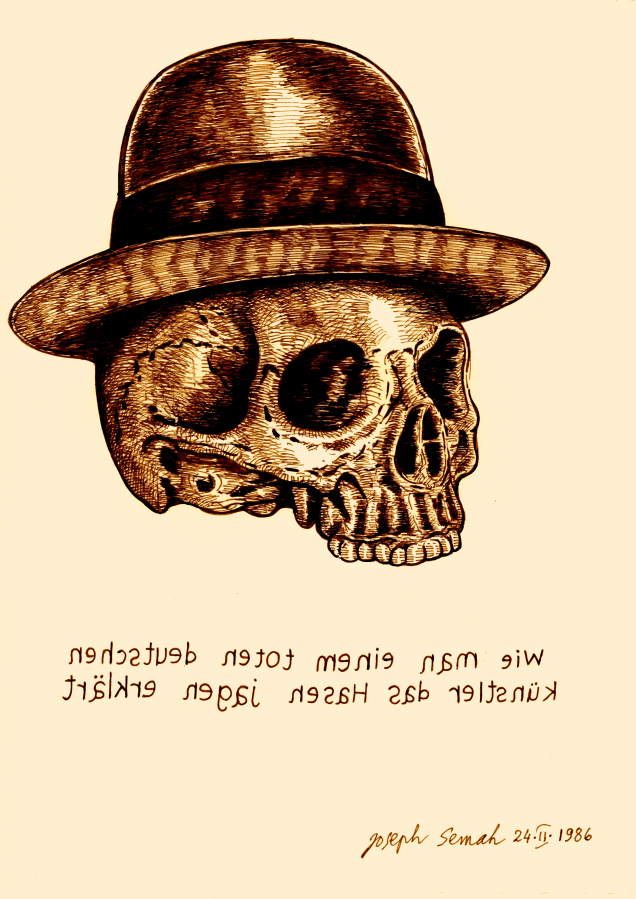
- How to Explain Hare Hunting to a Dead German Artist [The usefulness of continuous measurement of the distance between Nostalgia and Melancholia], '
Hasenjagd' is the code word for killing Jews during WWII (2021-2023).
In 2021/2022 the 100th anniversary of the birth of the artist Joseph Beuys was celebrated in Europe, among others with a special event Beuys 2021. 100 years. Joseph Beuys (1921, Krefeld - 1986, Dusseldorf) is one of the influential post-war German artists, who became particularly famous for his performances, installations, lectures, and Fluxus concerts.
But who is Beuys truly?
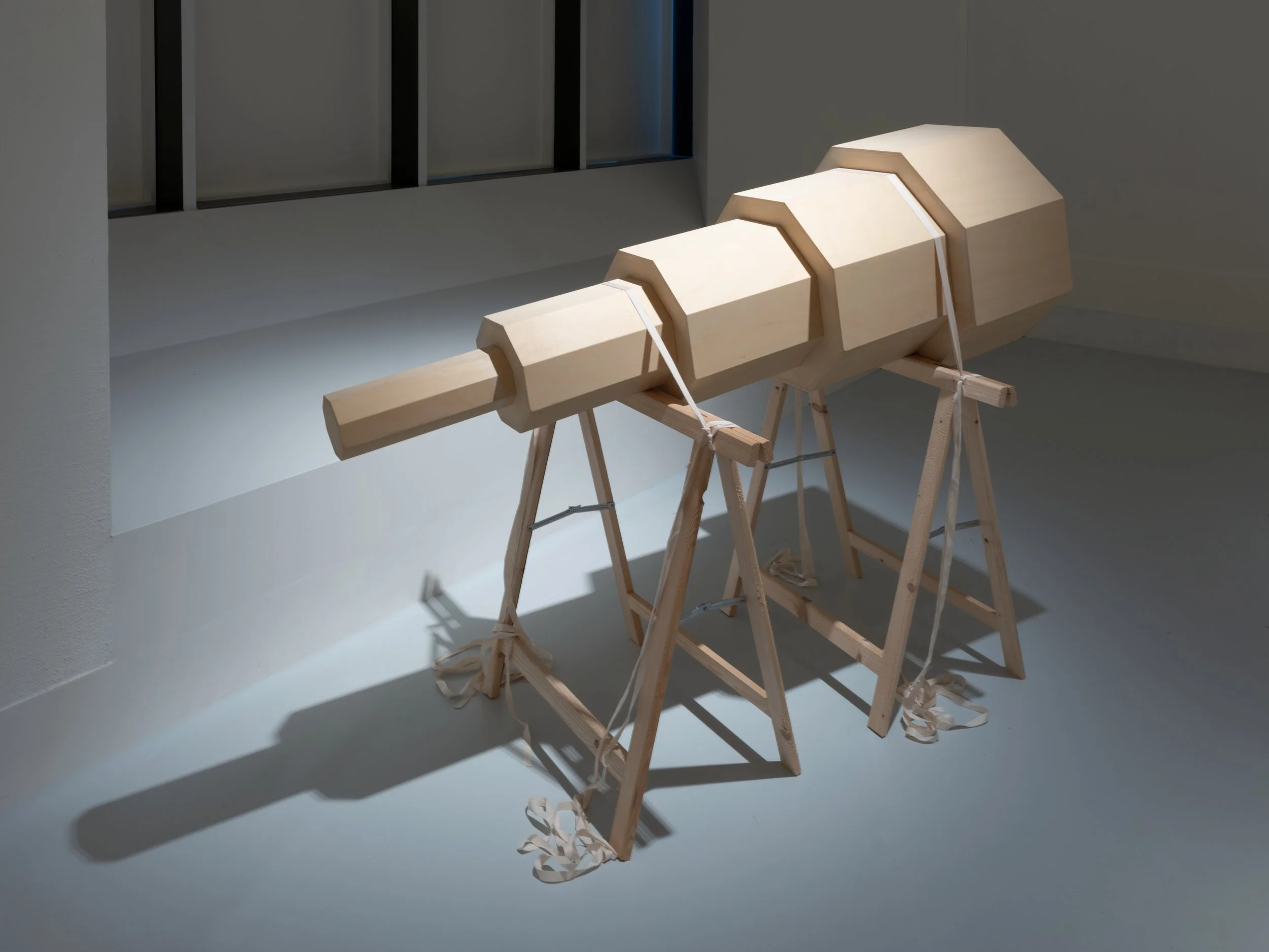
Joseph Beuys mythologized his war story as a National Socialist and Germany's post-traumatic era. After WWII Beuys transformed himself from perpetrator to victim. And yet, his service in the Luftwaffe during WWII did not really effect his artistic practice. During the 100-years manifestation the controversial activities, the significance, the post-war culture, and the political ideas of Joseph Beuys have not been properly criticised. As part of the celebration, it is high time we add a critical eye on Beuys' work, as well as on his association with Germany's post-war era. Joseph Sassoon Semah takes us on a critical journey concerning Beuys. He has done extensive research on Joseph Beuys' activities, values, and ideas while analyzing in the process the deeper meaning of the (hidden) symbols used by Beuys. He responded to Beuys with old and new three-dimensional works, a series of old and new drawings, performances, texts, and meetings.
On Friendship / (Collateral Damage) III
– The Third GaLUT: Baghdad, Jerusalem, Amsterdam (2019-2020)
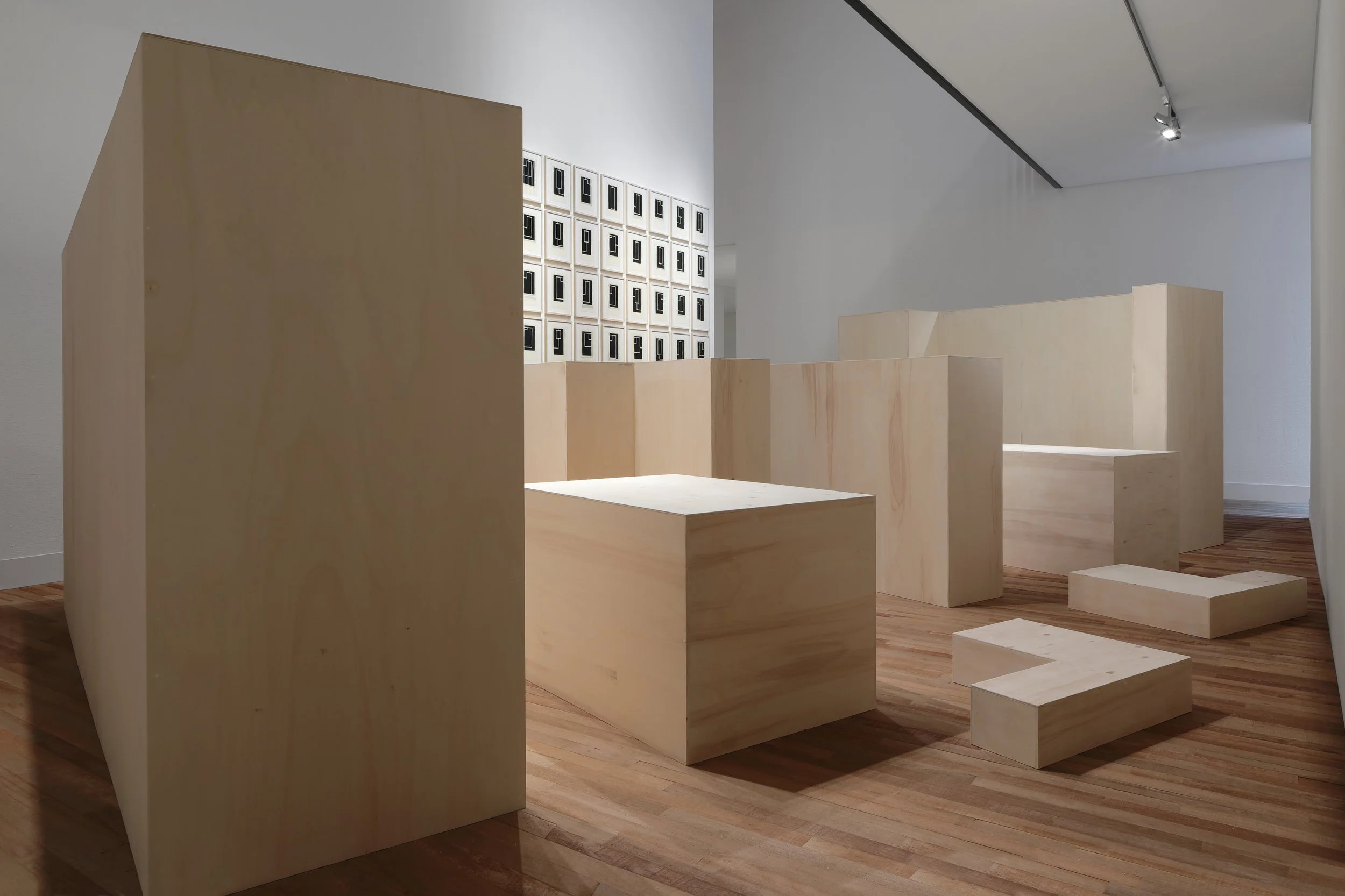
The dominant subject was the significance of lost culture, exile, hospitality, and identity. At 36 very different and diverse locations in Amsterdam, Joseph Sassoon Semah shared his forgotten cultural heritage via visual art, performances, debates and lectures. For the manifestation, Sassoon Semah produced 36 architectural models based on houses, cultural institutions, synagogues and Jewish graveyards in Baghdad prior to 1948, referring to the lost rich history of the Jewish Babylonian culture.
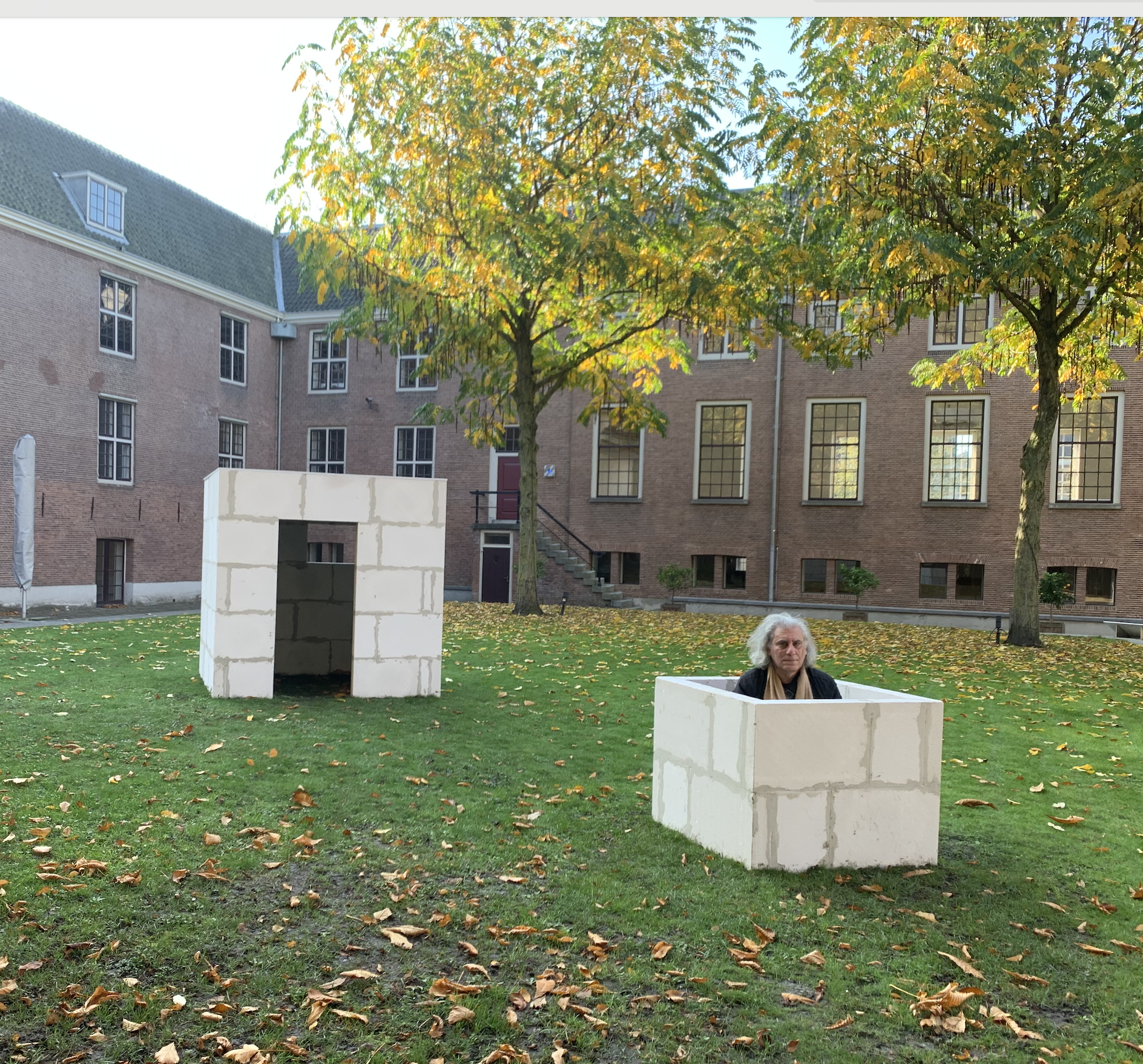
At the same time, he built two temporary houses - named MaKOM in MaKOM - in Amsterdam (Hermitage Amsterdam), and in Jerusalem (Jerusalem Biennale). In the manifestation, specific reference was made to the cultural and religious diversity in Jewish communities, with the purpose of giving the rich Babylonian Jewish culture a place next to the Western Jews, and the memory of SHOAH. In a metaphorical sense, Part III is an ode to a lost culture, and at the same time an invitation to dialogue between the different points of view in Judaism.
On Friendship / (Collateral Damage) II
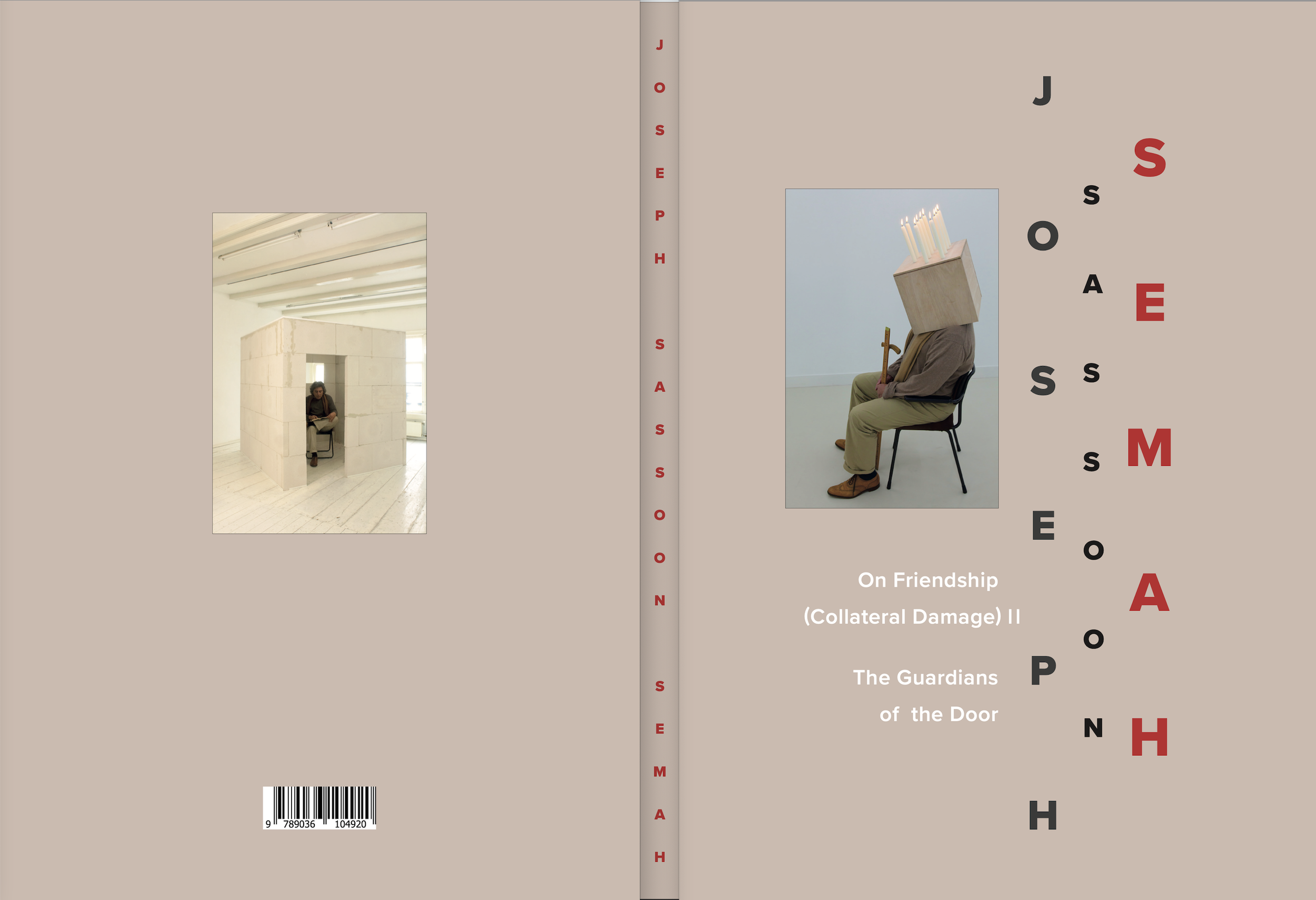
– The Guardians of the Door (2017-2018)
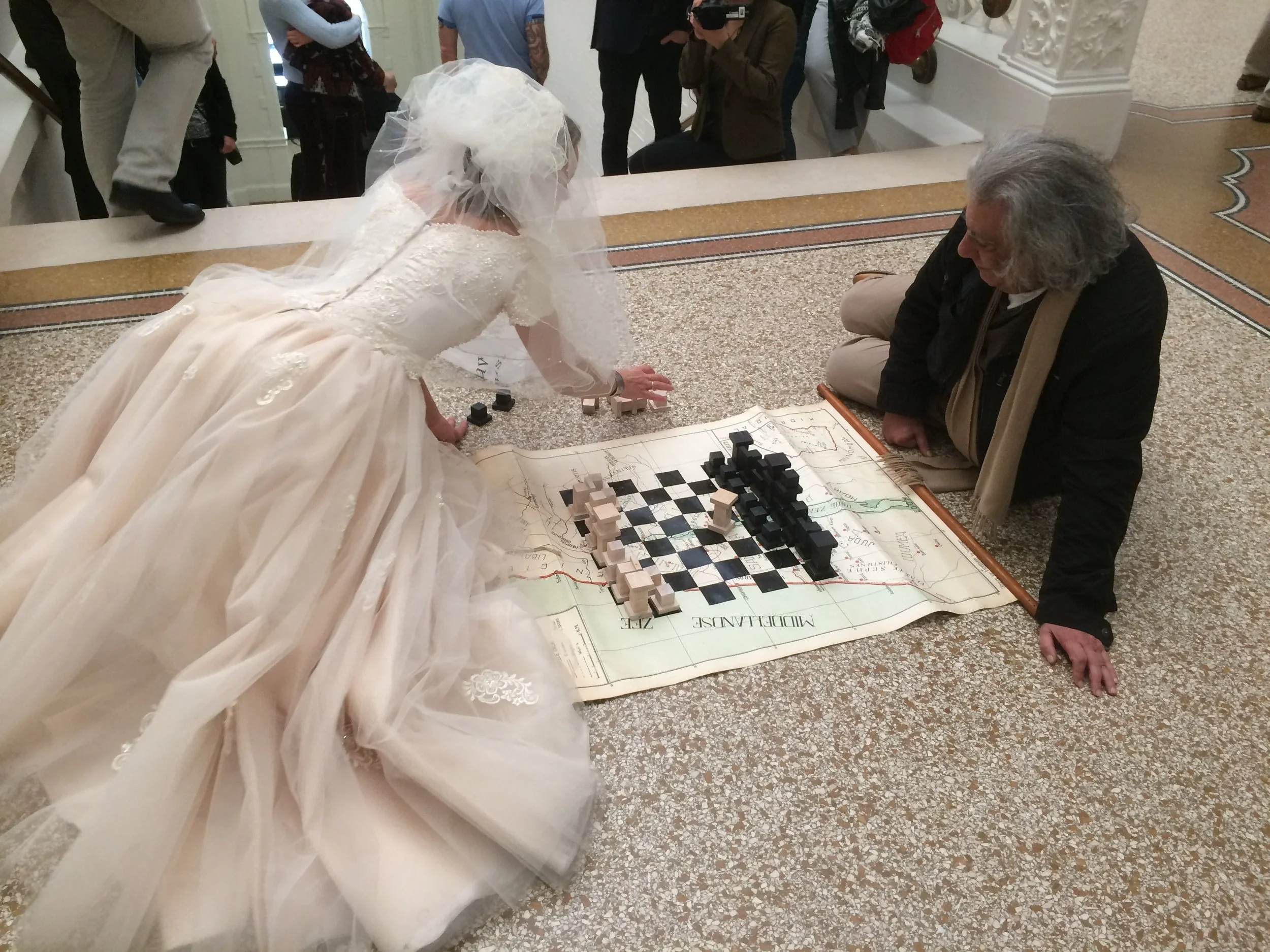
The focus was on Martin Luther and 500 years since the start of the Reformation, a critical artistic reflection on Luther's image as a 'superstar', including his antisemitic publication named On the Jews and Their Lies (1543), it's meaning, then and now. The critical reflection included works of art, artistic interventions, performances, lectures and a publication. The Nieuwe Kerk, Joods Historisch Museum, Stedelijk Museum Amsterdam and Goethe-Institut Amsterdam were partners in the project. As part of this manifestation, Joseph Sassoon Semah created a work of art entitled The Doubling of the House in the premises of the Stedelijk Museum, and he gave 5 performances with friends, in which he responded to the collection of the Museum. Prior to the performances, a Stedelijk Statement evening took place and the accompanying book was presented. In one of the performances, he painted a tetragrammaton on the wall of the historic staircase in which he first made a reference to Toroni's vanished work, that is before he painted over it a black square. From the moment this black square was painted on the wall, the future discourse with ‘the Guest’ is no longer without obligation. The Guest becomes part of the institute. The Guest is transformed into the Host.
On Friendship / (Collateral Damage) - 2015
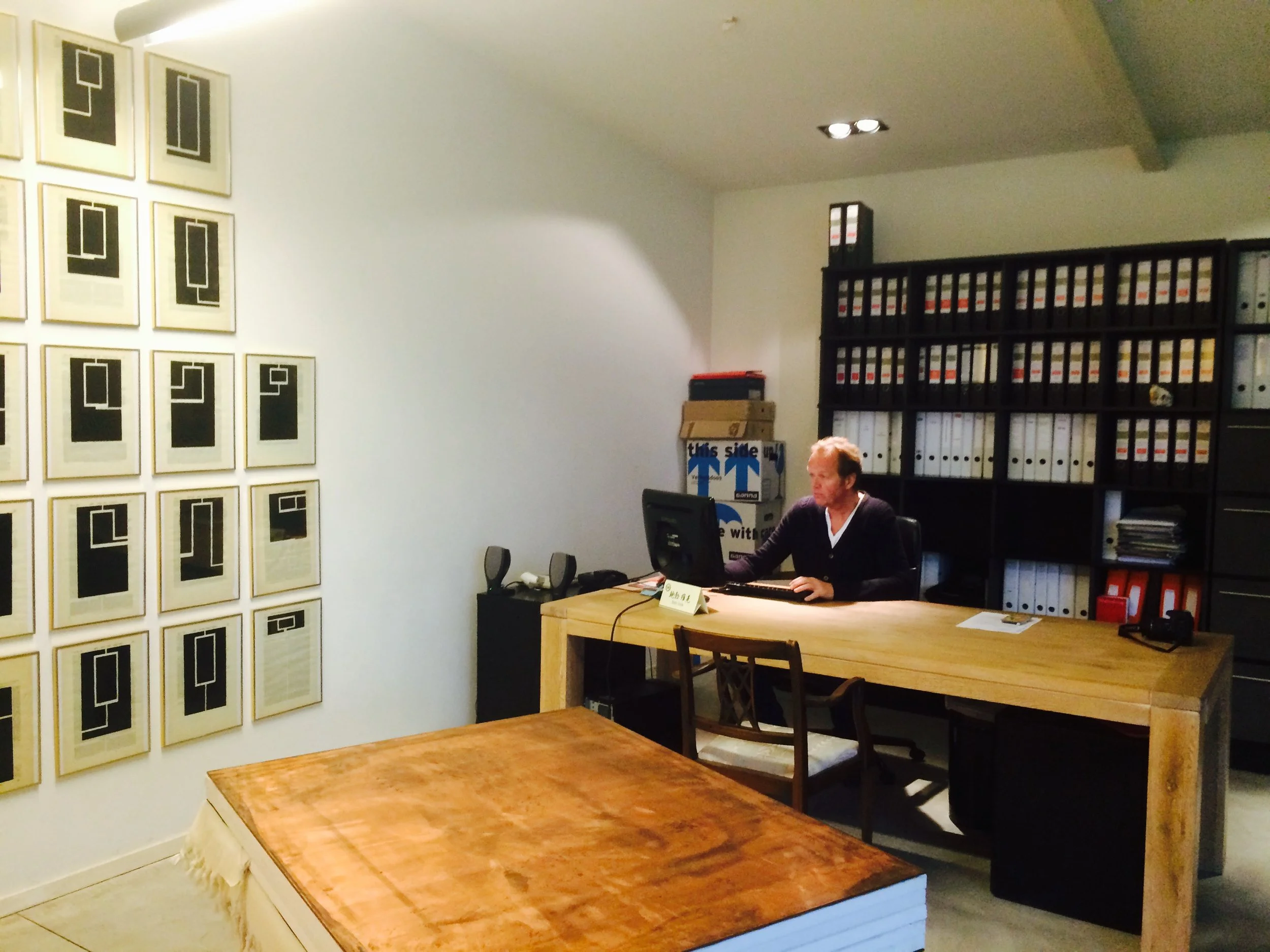
Our lawyer B.A. Vink called upon Beatrix Ruf (director of the Stedelijk Museum) to account for 'the empty page' (lack of Jewish context) in art history on behalf of the art world. The accompanying information provided by the museum gives less attention to the Jewish narrative. Such as the information provided about the artwork of Kazimir Malevich (The Black Square) and Barnett Newman. As a result of our project, the Stedelijk Museum Amsterdam adapted our information to the hall text of Newman's Cathedra, and by that The black square cannot view only through the lens of the Futuristic Manifesto and Christian tradition, but also through the Jewish layers of meaning.
Publication The richly illustrated publication On Friendship / (Collateral Damage can be ordered: Stichting Metropool Internationale Kunstprojecten, € 25 and € 5 shipping costs, account number NL 42 INGB 0006 9281 68 stating On Friendship I, name and address.
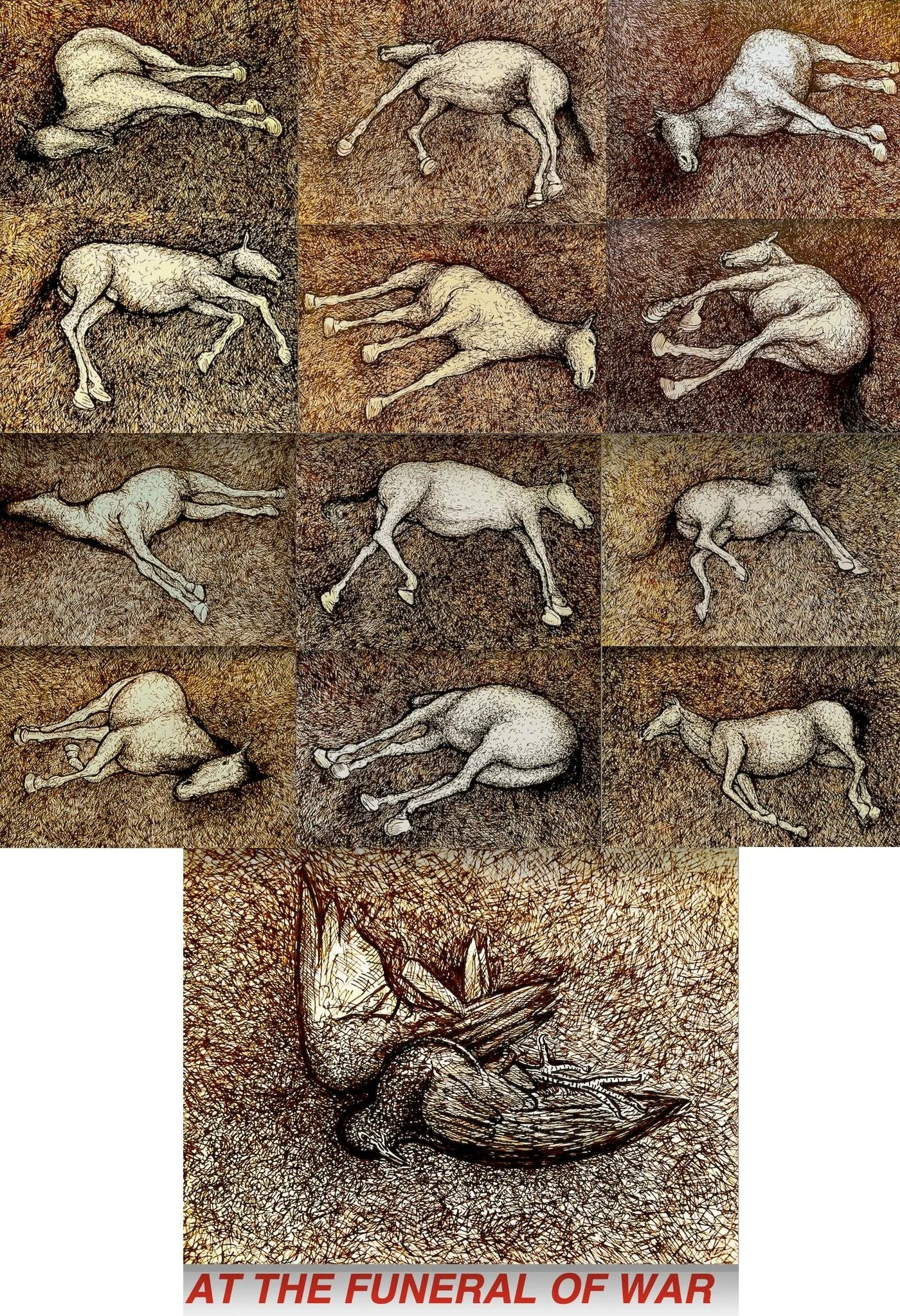
AT THE FUNERAL OF WAR 2027-2029
We are at a crucial moment in history. Conflicts rage in different parts of the world, while diplomatic efforts try to maintain or restore peace. The balance of power is shifting, with increasing tensions between major powers such as the US, China and Russia.
War and peace are complex concepts, shaped by geopolitical tensions, economic interests and ideological divisions. Cyber warfare, economic sanctions and disinformation campaigns now play a major role in global conflicts. The idea of peace has also changed: it is no longer just about the absence of war, but also includes human rights, economic stability and ecological security.
It is time for a new artistic, topical and cultural-political investigation, resulting in the multi-year art manifestation: ‘At the Funeral of War [Toward Perpetual Peace]’.
At the Funeral of War
Joseph Sassoon Semah:
“War is an undeniable part of our human existence. We live between peace and war or between war and peace. The end of every war can be read in two ways. Either as the despair of total destruction, or as the despair of a certain form of humanity, which is also always present. Even in the context of measuring time, every war has only a limited amount of economic, physical and emotional energy to expend.”
The central theme is the complex relationship between the 'politics of war' and the 'politics of peace'. By placing biblical texts about Noah and texts by, among others, Augustine of Hippo and Immanuel Kant, author of ‘Towards Eternal Peace’, alongside contemporary authors and his own texts on war and peace, Joseph Sassoon Semah investigates how art can contribute to understanding and reflecting on this dynamic. With ‘Funeral of War’ we bring together art, philosophy, religious writings and contemporary theories on war, peace and hope around urgent questions about war and peace.